
Advanced Concrete Calculator
Calculate concrete volume for slabs, footings, and stairs. Use our real-time estimator for quick dimensions, or add multiple shapes to build a full project report.
1. Configure Structure Shape
2. Saved Project Structures 0 items
2. Global Options & Cost
Grand Total Required
Pre-Mixed Bags Required
Did you like the tool?
Did we solve your problem?
Rate the tool
How to Use Our Free Concrete Calculator
Planning a construction, landscaping, or masonry project requires high precision. Ordering the incorrect amount of materials can lead to structural vulnerabilities—like cold joints—or expensive waste disposal fees. Using a reliable, highly accurate Concrete Calculator is the first and most critical step for a successful pour.
To use our free tool, simply select the exact shape of your structure from the visual menu. Whether you are building a standard flat slab, digging a strip footing, setting a round column, or framing complex stairs, our tool adapts instantly. Next, adjust the interactive sliders to input your exact dimensions. As you adjust the numbers, the Concrete Calculator instantly processes the data to provide your total volume in cubic yards, cubic feet, and cubic meters, all in real time.
Understanding Cubic Yards and the Concrete Calculator
In the construction and concrete industry, particularly in the United States and Canada, ready-mix concrete is primarily ordered, measured, and sold by the cubic yard. A cubic yard is a three-dimensional block of material that measures three feet long, three feet wide, and three feet deep, totaling exactly 27 cubic feet. To put that into perspective, one solid cubic yard of standard concrete weighs approximately 4,050 pounds. If you need that volume for gravel, soil or mulch rather than concrete, the cubic yard calculator covers every bulk material and works across multiple areas at once. For deeper understanding, refer to this concrete materials guide.
When you input your specific project measurements into our Concrete Calculator, the tool automatically handles all of the complex mathematical conversions between inches, feet, and meters to give you an accurate cubic yard output. This guarantees that when you call your local ready-mix plant, you are speaking their exact language and ordering the precise amount required.
Why You Need a Concrete Calculator for Slabs and Footings
Estimating the volume for a simple square or rectangular shape might seem incredibly straightforward—just multiply length by width by depth. However, human error in unit conversion is extremely common and can be devastating to a project budget. For instance, multiplying a 10-foot length by a 10-foot width by a 4-inch depth without converting the inches into feet first will result in a massive mathematical miscalculation.
Our Concrete Calculator entirely prevents this common issue. It allows you to enter your width and length in feet while simultaneously entering your depth in inches. The algorithm instantly normalizes the units in the background to prevent costly mistakes, providing you with absolute peace of mind whether you are pouring a small backyard patio or an extensive residential foundation.
Factoring in the Waste Percentage with Your Concrete Calculator
One of the golden rules of masonry is that you should never order the exact mathematical volume of your concrete forms. Why? Because the ground beneath your project is rarely perfectly level. Spills naturally occur during the pouring process, wooden forms can bow outward under the immense weight of wet concrete, and uneven subgrades will consume far more material than a perfect geometric calculation suggests.
Our Concrete Calculator includes a dynamic, interactive waste factor slider, automatically defaulted to the industry standard of 10%. For highly irregular or rocky excavations, professionals often increase this waste factor to 15%. Including this safety margin ensures you do not run desperately short of material during the highly time-sensitive phase of pouring and finishing.
Choosing Between Pre-Mixed Bags and Ready-Mix Delivery
A highly common question among DIY enthusiasts and homeowners is, "Exactly how many bags of concrete do I need?" Once our Concrete Calculator determines your total volume, it breaks down the exact number of standard 40-pound, 60-pound, and 80-pound bags required to complete the job. As a general rule of thumb, if your project requires less than one total cubic yard of concrete, purchasing individual pre-mixed bags and mixing them manually in a wheelbarrow is the most cost-effective and manageable solution.
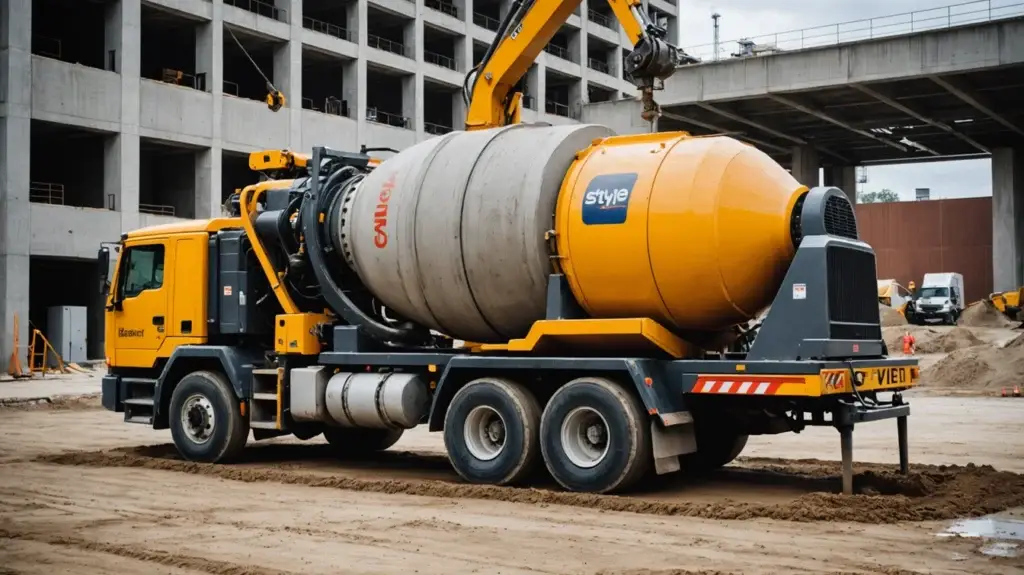
However, if your project exceeds one cubic yard—which equals roughly forty-five heavy 80-pound bags—the physical labor of hand-mixing quickly becomes overwhelming and inefficient. At this point, relying on the Concrete Calculator output to schedule a ready-mix delivery truck directly to your job site is highly recommended.
Calculating Concrete for Complex Shapes and Stairs
While flat rectangular slabs are relatively simple to plan for, figuring out the precise volume for round columns, circular pads, and poured stairs can be incredibly frustrating. Round columns require calculating the exact volume of a cylinder using Pi, the radius squared, and the height. Stairs are notoriously difficult, requiring the calculation of multiple rectangular step blocks and triangular throat wedges.
Our tool simplifies this geometry entirely. By simply selecting the "Column" or "Stairs" shape, the input fields dynamically change to ask only for the basic measurements you already know—like diameter, tread run, step rise, and the total number of steps. The Concrete Calculator handles the advanced math effortlessly, giving you the confidence to tackle more complex masonry designs. You can also explore more tools in our construction calculators category.
Frequently Asked Questions
How do I calculate how much concrete I need?
To calculate how much concrete you need for a flat slab, measure your length, width, and depth in feet. Multiply them together to find the total cubic feet, and then divide by 27 to get the total cubic yards. For a faster and more accurate estimate, use a free online Concrete Calculator.
How many 80 lb bags of concrete make a cubic yard?
It takes approximately 45 standard 80-pound bags of pre-mixed concrete to yield exactly one cubic yard of poured concrete.
What is a concrete waste factor and why do I need it?
A concrete waste factor is an extra percentage of material (usually 10% to 15%) added to your total volume order. It accounts for uneven subgrades, spills, spreading formwork, and minor miscalculations so you don't run short during the pour.
How many cubic feet are in a 60 lb bag of concrete?
A standard 60-pound bag of pre-mixed concrete yields approximately 0.45 cubic feet when mixed with the correct amount of water.
How much does 1 cubic yard of concrete weigh?
One solid cubic yard of standard cured concrete weighs approximately 4,050 pounds (or about 150 pounds per cubic foot).
Should I buy pre-mixed bags or order a ready-mix concrete truck?
As a general rule, if your project requires less than 1 cubic yard, buying pre-mixed bags and mixing by hand is best. If your project requires more than 1 cubic yard, ordering a ready-mix delivery truck will save you immense physical labor and time.