
Advanced Landscaping & Mulch Calculator
Calculate exactly how many bags or cubic yards of mulch, soil, or gravel you need for your garden beds and tree rings.
1. Bed Shape & Dimensions Updates Instantly
2. Saved Garden Beds 0 items
2. Purchasing & Cost
TOTAL VOLUME REQUIRED
- Material Type: Mulch
- Total Bulk Needed: 0.00 yd³
- If Buying Bags: 0 bags
Did you like the tool?
Did we solve your problem?
Rate the tool
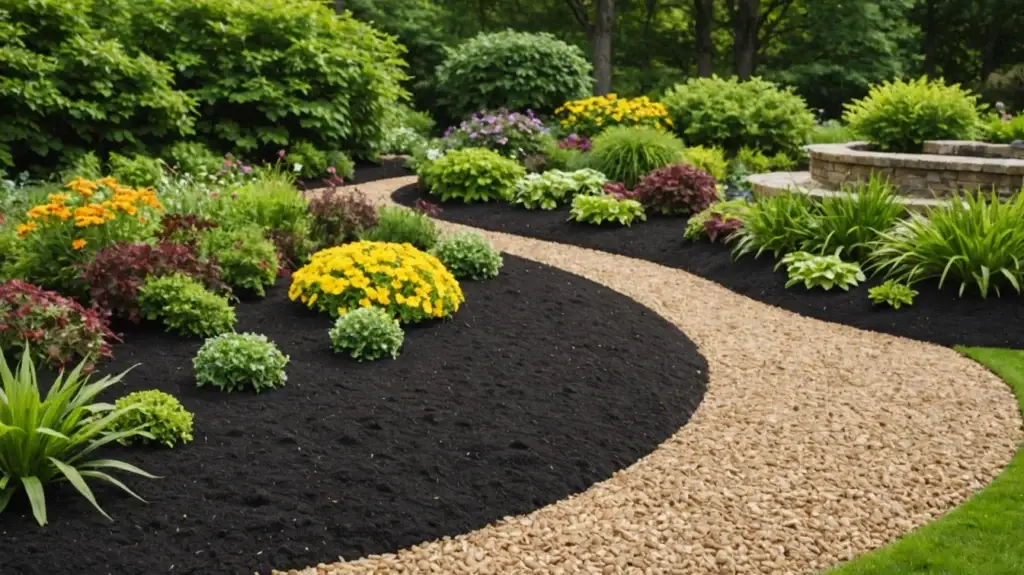
Why You Need a Reliable Mulch Calculator
Planning a spring garden refresh or a full backyard overhaul? The hard part is rarely the digging — it is working out how much material to buy. Order too little and the project stalls while you wait on a second delivery; order too much and you are left with a heap of bark spilling across the driveway. That is the gap this mulch calculator closes. Enter your bed dimensions and it returns the exact volume, whether you are laying cedar bark, nutrient-rich topsoil, or decorative gravel around a fire pit.
How to Use the Mulch Calculator
Start by measuring your beds. For a rectangular border, run a tape measure along the length and width and enter those figures in feet or meters. Working around a tree ring or a curved island bed instead? Switch the shape to circular and type in the diameter. If your yard has more than one bed, add each to the project list — front borders, side pathways, a tree ring or two — and the mulch calculator adds up the total for you. Measure once, and leave the arithmetic behind before you get to the store.
Converting Cubic Yards to Bags
Bulk material is sold by the cubic yard, but bags are what you actually carry home, and switching between the two trips people up at the garden center. Enter your dimensions and the tool shows both numbers at once: the cubic yards you would order from a dump-truck delivery, and the same amount counted out in standard 2-cubic-foot or 3-cubic-foot bags. With the two side by side, the price comparison is simple. A bulk drop usually wins for a large overhaul, while a dozen bags in the trunk is often cheaper for a single flower bed.
Choosing the Right Material Depth
Depth changes the result more than people expect, so the tool gives it its own slider. Two to three inches is the sweet spot for wood bark — thick enough to smother weeds and hold soil moisture through summer, without burying the roots. Set it to three inches for a typical bed. Filling a raised vegetable garden with fresh topsoil is a different job: push the depth to twelve inches or more and the volume recalculates on the spot for whichever material you pick from the dropdown. For help matching a mulch type to your beds, this mulching guide is a solid reference.
Factoring In Costs and Delivery Fees
A useful estimate covers the budget, not just the volume. Enter a price per cubic yard or per bag and the mulch calculator tallies the cost as you adjust the numbers. Bulk soil and gravel almost always carry a delivery charge, so there is a separate field for that flat fee — worth filling in before it surprises you at checkout. It is a quick way to price a whole project before committing to an order. To estimate other materials, browse the rest of our construction calculators category.
Mulch Coverage Chart: How Much Ground Does a Yard Cover?
One cubic yard of mulch covers roughly 108 square feet at a 3-inch depth — or 162 square feet if you spread it just 2 inches thick. Coverage drops as the layer gets deeper, because the same 27 cubic feet of material is stretched over less ground. The chart below shows how far a cubic yard, a 2-cubic-foot bag, and a 3-cubic-foot bag each reach at the depths people use most.
| Depth | Per cubic yard | Per 2 cu-ft bag | Per 3 cu-ft bag |
|---|---|---|---|
| 1 inch | 324 sq ft | 24 sq ft | 36 sq ft |
| 2 inches | 162 sq ft | 12 sq ft | 18 sq ft |
| 3 inches | 108 sq ft | 8 sq ft | 12 sq ft |
| 4 inches | 81 sq ft | 6 sq ft | 9 sq ft |
At the bag level, a full cubic yard works out to about 13.5 of the standard 2-cubic-foot bags, or 9 of the larger 3-cubic-foot bags. The Coverage / Yard box in the tool runs this same math live, so the square-footage figure shifts the instant you move the depth slider.
How Deep Should You Spread Mulch?
Two to three inches suits most planting beds, but the right thickness really depends on the job. Too thin and weeds push straight through; pile it more than about 4 inches against stems or trunks and roots can suffocate or rot. Treat the depths below as starting points, then dial the same number into the depth slider.
| Where you are spreading it | Recommended depth |
|---|---|
| Flower beds and around trees | 2–3 inches |
| New beds / weed suppression | 3–4 inches |
| Pathways and borders | 3–4 inches |
| Refreshing existing mulch | 1–2 inches (top-up only) |
| Playground safety surfacing | 6–8 inches |
| Winter root protection | 2–4 inches after the first hard freeze |
Keep mulch pulled back a few inches from trunks and plant crowns rather than mounding it up against them — the volcano look does more harm than good. Laying a hardscape base for a path or fire pit instead? The same cubic-yard math drives our concrete calculator.
Frequently Asked Questions
How do I calculate how many cubic yards of mulch I need?
To calculate cubic yards of mulch, first measure the length and width of your garden bed in feet, and multiply them to find the square footage. Next, decide on your depth in inches (usually 3 inches) and divide that number by 12 to convert it to feet. Multiply your square footage by this depth in feet to get cubic feet. Finally, divide the total cubic feet by 27 to find the required cubic yards.
How many bags of mulch equal one cubic yard?
There are 27 cubic feet in one cubic yard. If you are buying standard 2 cubic foot bags of mulch, you will need 13.5 bags (round up to 14) to equal one cubic yard. If you are buying larger 3 cubic foot bags, you will need exactly 9 bags to equal one cubic yard.
How deep should mulch be applied in a garden?
Landscaping professionals recommend laying mulch at a depth of 2 to 3 inches. This depth is thick enough to block sunlight and prevent weed growth, while still allowing water and oxygen to reach the root systems of your plants. Laying mulch deeper than 4 inches can suffocate plant roots and cause rot.
Is it cheaper to buy mulch in bulk or in bags?
For larger projects requiring more than 2 or 3 cubic yards, buying bulk mulch delivered by a truck is almost always cheaper per yard than buying individual bags. However, for small garden touch-ups requiring less than a yard, bagged mulch is usually more cost-effective because you avoid expensive flat-rate delivery fees.
Can I use a mulch calculator for topsoil and gravel?
Yes, you can use a mulch calculator for topsoil, compost, sand, and gravel. The mathematical formula for finding volume (length x width x depth) is exactly the same regardless of the material. However, keep in mind that a cubic yard of gravel weighs significantly more than a cubic yard of mulch, which may affect delivery methods.
How do you calculate mulch for a circular tree ring?
To calculate mulch for a circular tree ring, measure the total diameter of the circle in feet, and divide it by 2 to find the radius. Multiply the radius by itself (radius squared), and then multiply that number by Pi (3.14) to get the square footage. Finally, multiply the square footage by your desired depth (in feet) and divide by 27 to get cubic yards.
How much mulch do I need per square foot?
At a 3-inch depth, one 2-cubic-foot bag of mulch covers about 8 square feet, so you need roughly one bag for every 8 square feet of bed. In bulk terms that is about 0.0093 cubic yards per square foot at 3 inches. Enter your bed's square footage in the calculator above and it returns the exact volume and bag count for you.
How much does one cubic yard of mulch cover?
One cubic yard of mulch covers about 108 square feet at a 3-inch depth, 162 square feet at 2 inches, or 81 square feet at 4 inches. The coverage shrinks as the layer gets deeper because the same 27 cubic feet of material is spread thicker across the ground.
How much extra mulch should I order for waste?
Order about 5 to 10 percent more than the exact calculated amount to cover settling, uneven ground, and irregular bed edges, and push that to 15 percent for sloped or very irregular areas. The waste-buffer setting in the calculator adds this cushion to your volume, bag count, and cost automatically.
How much mulch do I need for a playground?
Playground safety surfacing needs a far deeper layer than garden beds — usually 6 to 8 inches of certified playground wood mulch or rubber mulch to cushion falls. Set the depth to 6 to 8 inches in the calculator and it sizes the volume for your play area; at 6 inches, one cubic yard covers about 54 square feet.